

Insecurity: The Quiet Threat That Shapes Your Leadership
Leadership has a way of amplifying whatever is already happening beneath the surface, doesn’t it? If there’s clarity, it multiplies. If there’s insecurity, it spreads just as quickly and often in subtle ways. It can look like over-controlling decisions, needing constant validation, avoiding risks, or quietly comparing yourself to others who seem more capable or successful.
Insecurity isn’t just a personal struggle; it shapes how you lead people.
At its core, insecurity is an identity issue. When we’re unclear about who we are, like measuring our worth by performance, feedback, or outcomes, we become vulnerable to believing things that simply aren’t true. A missed goal becomes “I’m not capable.” A piece of criticism becomes “I’m not respected.” Over time, these thoughts don’t just pass through your mind. You internalize them, true or not.
Psychology calls these “automatic thoughts,” the quick interpretations that flow from deeper core beliefs. Circumstances give birth to this messaging. The question is whether these messages are true.
There’s a helpful illustration of this dynamic in C.S. Lewis’s The Screwtape Letters. The idea is simple: the greatest threats to your stability don’t always come from frontal attacks. Sometimes they come from subtle distortions, side attacks, and shifts in perception that slowly erode your clarity and confidence. Can you spot these in yourself?
Perception = Reality
There’s an old illustration of a pike fish placed in a tank with smaller fish. At first, it eats freely. Then a glass barrier is introduced. Each time it tries to reach the fish, it hits the barrier. Eventually, it stops trying. Even when the barrier is removed, the fish doesn’t attempt to eat again. It learned a false limit and lives within it until it dies.
That’s what insecurity does.
At some point, something didn’t work—a failure, rejection, or limitation—and instead of seeing it as an event, it became a belief: “This is how I always fail.” From then on, decisions, risks, and even vision shrink to match that false perception.
Many capable leaders are operating inside invisible barriers that no longer exist.
Three Anchors
To lead with clarity and steadiness, you need a grounded sense of identity. Three qualities are especially critical: significance, sufficiency, and security. When these are missing, insecurity fills the gap.
1. Significance: Know your value
True humility is seeing yourself accurately without demeaning yourself. When you believe you’re inadequate, it will eventually show up in how you live and lead.
2. Sufficiency: Use what you already have
Insecurity fixates on what’s missing. Strong leaders focus on what’s already in their grasp, and work with that.
3. Security: Don’t build on approval
If your stability depends on others’ opinions, you’ll always feel off-balance. Leadership doesn’t fix that desire, though; it exposes it. When you’re secure, you don’t need to prove yourself in every room. You can listen more openly and handle feedback without taking it too personally.
Leading Beyond Insecurity
Insecurity doesn’t disappear overnight, and it doesn’t mean you’re unfit to lead. But it does need to be addressed honestly.
When it shows up, don’t just manage the feeling. Examine the core belief behind it.
Ask yourself:
What am I telling myself right now?
Is this actually true, a reaction to a recent event, or a long-standing trauma?
What evidence supports or contradicts this belief?
Your key as a leader is to distinguish distortion and replace it with clarity. Your goal isn’t to become a leader who never feels doubt in yourself. It’s to become one who isn’t controlled by it!
ADDITIONAL RESOURCES
Books:

How to Be Enough: Self-Acceptance for Self-Critics and Perfectionists by Ellen Hendriksen
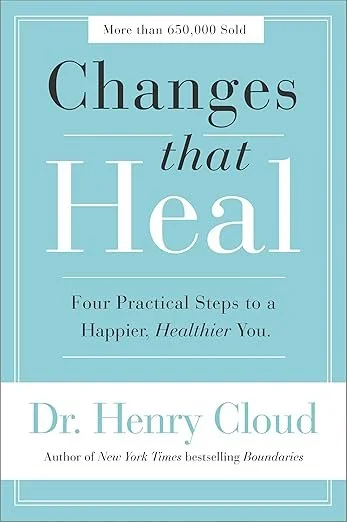
Changes That Heal by Dr. Henry Cloud