

Leading Through Bewilderment: Building in the Dark
Leadership often gets framed as clarity, confidence, and decisiveness. Yet many of the defining moments of leadership emerge not from certainty, but from bewilderment — seasons where answers are delayed, outcomes are unclear, and deeply held beliefs are shaken.
Bewilderment is the emotional and mental disorientation that occurs when reality no longer aligns with your expectation. It is the executive whose turnaround plan fails despite careful preparation, the ministry leader who prays faithfully yet watches attendance decline, and the entrepreneur who launches with conviction only to encounter limited revenue and silence. In those moments, we don’t merely lose momentum; we often lose a sense of direction and hope.
Many people believe that if they only knew “why,” they could endure almost anything. Yet throughout Scripture, some of God’s most faithful servants were never fully given the reasons behind their suffering or confusion. Job questioned deeply but never received a complete explanation. Habakkuk wrestled openly with injustice and silence. John the Baptist, after boldly preparing the way for Christ, later sent word from prison asking if Jesus truly was the One they had awaited.
Their stories reveal something essential for leaders today: bewilderment is not evidence of failure but is common to us all. Seasons of darkness are part of life.
Modern leadership culture often promotes a “Pollyanna” mindset, the belief that strong vision, positive thinking, or sufficient faith should produce uninterrupted success. When leaders internalize this expectation, difficult seasons create disillusionment. They question their judgment, purpose, and God’s care. But bewilderment can become a fruitful season if leaders respond wisely!
First, bewilderment strengthens faith muscles that comfort can’t develop. A leader who has never faced uncertainty may appear strong, but strength tested in darkness becomes firmly resilient. The leader who continues serving without immediate results or an “end in sight” develops endurance, humility, and dependence.
Second, bewilderment deepens insight. There are truths visible only after walking through darkness. Leaders who have suffered disappointment often become more compassionate, patient, and discerning. They stop leading merely from theory and begin leading from tested experience—from head to heart.
Third, bewilderment teaches dependence. Many leaders unconsciously lean on systems, strategies, reputation, and personal competence. Yet difficult seasons expose how fragile those supports can be. Sometimes comforts and securities are stripped away so leaders discover that God alone is sufficient. People and things aren’t consistent.
This is where leadership maturity becomes visible.
One of the clearest leadership lessons in waiting through darkness comes from Abraham. Promised a son, he endured a decades-long season of uncertainty. Yet in impatience, he eventually took matters into his own hands, creating consequences and heartache lasting generations. Leaders today make similar mistakes when they force outcomes prematurely simply to escape uncertainty, such as rushing and manipulating decisions, compromising values, or abandoning principles.
The greatest danger in bewilderment is not confusion itself but losing faith and hope in the middle of it. That is why the book of Job remains such a profound leadership example. Amidst devastating loss and unanswered questions, Job declared, “Though He slay me, yet will I trust Him.” That is not blind faith. It is seeing faith, a confidence rooted not in immediate explanations, but in the character and promises of God.
Dark seasons do eventually end and, until clarity and breakthrough emerge, growth is taking root in your character, shaping you into a stronger person and leader.
Leaders today need more than strategy. They need endurance for seasons of darkness when strategy alone cannot achieve quick outcomes. Bewilderment does not disqualify leadership. Often, it is the place where deeper leadership is formed.
What practices help you maintain hope and endurance during dark seasons?
What “comforts” or securities might God be removing to deepen your dependence on Him?
ADDITIONAL RESOURCES
Books:
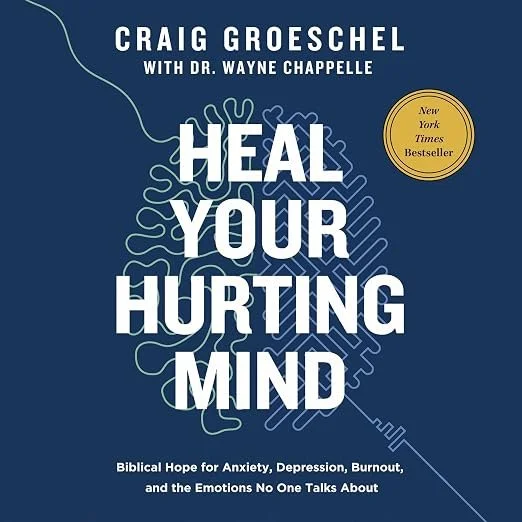
Heal Your Hurting Mind by Craig Groeschel

The Lie You Don't Know You Believe: How to Find It, Fight It, and Live Free by Jennie Allen
Blogs:
What to Do When You’re Disappointed & Discouraged | Crossline Community Church
How Should Christians Handle Disappointment? | Revive Our Hearts
Disappointment | Biblical Counseling
Dealing With Disappointment | Christian Family Solutions
Coaching:
Dr. Michele Fleming, Townsend Leadership Program Director, Coach & Consultant